Thursday, January 17, 2013
Manti Te'o's girlfriend real or fiction?
Notre Dame linebacker Manti Te'o is caught up in a whirlwind scandal with the potential to usurp his attention-grabbing 2012 College Football season.
In September, Te'o, a 2012 Heisman Trophy finalist, revealed that his grandmother had passed away. Just six hours later, Te'o announced that his girlfriend Lennay Kekua, who had survived a car accident, had also passed away from her battle with leukemia.
Well, as you know, Te'o, inspired by these two losses, carried his team to the National Championship game; Notre Dame's first shot at the title in 24 seasons. But a recent expose has called into question the credibility of his story; particularly of Kekua's existence.
Well does she exist or not?
Not according to a story published by online sports publication Deadspin, which you can read in its entirety here
Writers Timothy Burke and Jack Dickey allege that the picture of Kekua floating around the internet, and being used in media stories, is of a 22-year-old California woman who is not only alive, but was never in an accident or battled cancer.
Te'o claims he was the victim of a calculated hoax, saying he was led to believe a young woman he developed an emotional online and phone relationship with was real. But the story gets complicated because much of the details shared by the media has taken many dramatic twists and turns in a bid to paint Te'o as an inspiration to others. Te'o never shied away from sharing details about meeting her (in person) after a game at Stanford, which we now know to be false. He shared a tear-jerker about staying up all night to talk to her while she lay on a hospital bed.
Deadspin cites a former classmate of the unidentified woman in the picture, Ronaiah Tuiasosopo, as the likely source of the hoax. Other classmates have apparently said they believe Tuiasosopo created the hoax. A Notre Dame official says Te'o was merely a victim, but a friend of Tuiasosopo told Deadspin he was "80 percent sure" that Te'o helped plan the hoax to help boost his popularity.
This story gets weirder. An Arizona Cardinal football player is claiming that Kekua's identity is real and that he met her during a charity visit to Samoa in 2011. Reagan Mauia said while visiting the American territory along with fellow Polynesian football player Troy Palomalu, he was introduced to Kekua by Tuiasosopo. In ESPN's report of the story, he described her as a "Volleyball-type of physique. She was athletic, tall, beautiful. Long hair. Polynesian. She looked like a model ..."
There's so much conflicting information about this story that it warrants reading the original story on Deadspin to get the full picture. But you get the message. Someone's lying in this picture, and this is the worst time for a big-time athlete to be labeled a liar.
Fresh off revelation that seven-time Tour de France winner Lance Armstrong took part in perhaps the biggest doping cover-up in sports, and emphatically lied about it, Te'o should want nothing to do with this story right now. He's been touted as a possible first round draft pick in this year's NFL draft, but if it turns out that he partook in a calculated attempt to deceive the whole country –using a devastating disease like leukemia no less–then his career as he knows it is over. Notre Dame can protect him for the remainder of his college career. Some NFL team may even take a chance on him (heck, even convicted liar Maurice Clarett was drafted,) but he will never get the fame or endearment that he so badly coveted. He'll forever be linked to this bizarre plot.
Sadly, the price of fame has risen to such astronomical heights that people would do just about anything to get it. In this day when reality TV is considered more profitable than original scripted programming, exposing the supposed reality of everyday people is the norm. It doesn't matter that most reality shows have in fact been determined to be anything but real; merely dusted fragments of actual reality sprinkled into the giant pot of scripted reality soup. The Te'o reality show fits this bill to the Tee. There were some real aspects of it: his grandmother's passing was genuine. But that story was largely overshadowed by the more tear-inducing, but totally unreal one of his cancer-stricken girlfriend, which was eaten up by the media and retold at any moment Te'o's face flashed across a TV screen.
It would be nice to know Te'o had nothing to do with this. It will be good to know he's too talented to have relied on cheap tricks exploiting the sympathy of cancer victims, their families and college football fans. But I'm a little suspicious of a relationship so strong and inspiring, but not nearly enough to warrant a visit after her supposed car accident, her battle with leukemia, her funeral or even to her tombstone. Not even so much as a skype confirmation of her existence? Why didn't he correct the misinformation about Kekua enrolled as a student in Stanford? I want to give Te'o the benefit of doubt, but as Armstrong and reality TV have proven, some people will go through any length to be successful.
Is Te'o one of them?
**Here's a link to a CBS story about Manti Te'o overcoming the odds. Unfortunately the embedding function was disabled so I couldn't post it on here. But you can find it here.
Meanwhile you can check out this ESPN video summarizing the aftermath of the Deadspin expose.
Saturday, January 12, 2013
Lance Armstrong to admit doping in Oprah interview
After years of denial, cyclist Lance Armstrong plans to confess to doping during his long and successful career, which produced a record seven Tour de France titles.
Several sources say Armstrong will come clean in an interview with Oprah Winfrey, which will be taped Monday. The interview will air on Thursday.
Details of the interview have not been released, so it isn't exactly clear how much Armstrong will say about his role in what has been called the most comprehensive doping cover-up in sports history. According to a statement on her website, Winfrey's says it will be a "no-holds-barred interview."
So why now? Why admit to it after years of denial, libelous lawsuits and millions in donations to his Livestrong Foundation? Sources say Armstrong hopes to earn some sympathy for his foundation, which helps cancer victims battle their disease. He no longer sits on the board of the foundation. Armstrong, 41, also hopes to have a shot at returning to competition. The cancer survivor was a competitive triathlete after his cycling career ended, but received a lifelong ban from competing in any event sanctioned by the World Anti-Doping Agency after he was stripped of his titles.
Several sources say Armstrong will come clean in an interview with Oprah Winfrey, which will be taped Monday. The interview will air on Thursday.
Details of the interview have not been released, so it isn't exactly clear how much Armstrong will say about his role in what has been called the most comprehensive doping cover-up in sports history. According to a statement on her website, Winfrey's says it will be a "no-holds-barred interview."
So why now? Why admit to it after years of denial, libelous lawsuits and millions in donations to his Livestrong Foundation? Sources say Armstrong hopes to earn some sympathy for his foundation, which helps cancer victims battle their disease. He no longer sits on the board of the foundation. Armstrong, 41, also hopes to have a shot at returning to competition. The cancer survivor was a competitive triathlete after his cycling career ended, but received a lifelong ban from competing in any event sanctioned by the World Anti-Doping Agency after he was stripped of his titles.
Saturday, December 22, 2012
Olympian comes clean on life as escort
Athletes have been known to turn to a variety of methods to either make or expand their bank accounts. Ex-Olympian Tim Montgomery took to check-cashing schemes after he went broke post a disgraceful track career. Former Chicago Bears wide receiver Sam Hurd allegedly invested in a cocaine and marijuana distribution business for which he is currently facing charges.

But a former track star is making headlines for a much different reason –her secret life as an escort. Three-time Olympian Suzy Favor Hamilton, 44, recently admitted to being an escort over the last year. She reportedly earned up to $600 for an hour of her 'company,' and as much as $6,000 a day. Using the name Kelly Lundy, she met with clients as far as Chicago, Las Vegas, Los Angeles and Houston.
You're probably guessing she did it to support herself financially considering how low track & field athletes get paid over the course of their careers.
Wrong.
Favor Hamilton has been living in a $600,000 home with her husband and 7-year-old daughter. She had sponsorship deals with the likes of Reebok, Disney, Oakley and Clairol. She has also enjoyed considerable success as a motivational speaker and operated a real estate brokerage company with her husband in Madison, Wis. According to court records, she doesn't have any financial problems.
So what was her reason for willingly participating in the sexual escapades? Favor attempted to explain her actions through comments via Twitter.
"I was drawn to escorting in large part because it provided many coping mechanisms for me when I was going through a very challenging time with my marriage and my life. It provided an escape from a life that I was struggling in. It was a double life."
Favor has said her actions were related to her battle with depression and an eating disorder, but there's hardly any other reason to feel sorry for her. By engaging in these trysts while still married, she not only exposed her husband to the dangers of contracting an STD, but she also set a horrible example for her daughter. She carried on with her affairs despite objection from her husband, and only appeared remorseful when she knew her secret life was about to be exposed.
Though claiming full responsibility for her behavior, she also called out the client who outed her to a reporter, calling him "scum." But for someone who knowingly abused the trust she earned from her husband, she is hardly the person to call out someone else for breaking the unwritten rules of the game by outing her.
Sound like someone who's truly penitent? Not if you ask me. It's too soon to know how much of this scandal would overshadow Favor Hamilton's accomplishments as an athlete, but right now so many people who had no clue who Suzy Favor Hamilton was now know her; for a different kind of accomplishment.
And for that, she gets no sympathy from yours truly.

But a former track star is making headlines for a much different reason –her secret life as an escort. Three-time Olympian Suzy Favor Hamilton, 44, recently admitted to being an escort over the last year. She reportedly earned up to $600 for an hour of her 'company,' and as much as $6,000 a day. Using the name Kelly Lundy, she met with clients as far as Chicago, Las Vegas, Los Angeles and Houston.
You're probably guessing she did it to support herself financially considering how low track & field athletes get paid over the course of their careers.
Wrong.
Favor Hamilton has been living in a $600,000 home with her husband and 7-year-old daughter. She had sponsorship deals with the likes of Reebok, Disney, Oakley and Clairol. She has also enjoyed considerable success as a motivational speaker and operated a real estate brokerage company with her husband in Madison, Wis. According to court records, she doesn't have any financial problems.
So what was her reason for willingly participating in the sexual escapades? Favor attempted to explain her actions through comments via Twitter.
"I was drawn to escorting in large part because it provided many coping mechanisms for me when I was going through a very challenging time with my marriage and my life. It provided an escape from a life that I was struggling in. It was a double life."
Favor has said her actions were related to her battle with depression and an eating disorder, but there's hardly any other reason to feel sorry for her. By engaging in these trysts while still married, she not only exposed her husband to the dangers of contracting an STD, but she also set a horrible example for her daughter. She carried on with her affairs despite objection from her husband, and only appeared remorseful when she knew her secret life was about to be exposed.
Though claiming full responsibility for her behavior, she also called out the client who outed her to a reporter, calling him "scum." But for someone who knowingly abused the trust she earned from her husband, she is hardly the person to call out someone else for breaking the unwritten rules of the game by outing her.
Sound like someone who's truly penitent? Not if you ask me. It's too soon to know how much of this scandal would overshadow Favor Hamilton's accomplishments as an athlete, but right now so many people who had no clue who Suzy Favor Hamilton was now know her; for a different kind of accomplishment.
And for that, she gets no sympathy from yours truly.
Sunday, December 16, 2012
Nneka performs in Philadelphia.
I shot this video months ago at a Nneka concert in Philadelphia. But due to a very busy period, which has resulted in very few posts, I'm only just posting it.
Nneka is an internationally recognized singer/rapper/songwriter, based in Europe. She is of Nigerian and German descent and her music is more widely recognized in Europe. She has recorded songs and/or performed with notable artistes such as Nas, The Roots and Damian Marley. One of her most popular songs, Heartbeat, was sampled by Drake into the hit song he wrote for up and coming UK artiste Rita Ora.
Nneka's music is a fusion between hip-hop, soul and afrobeat, drawing comparisons to the likes of Lauryn Hill, Ms. Dynamite, Asa and Fela Anikulapo-Kuti.
She has played to large crowds numerous times. But this concert at the World Cafe Live in Philadelphia was a more intimate setting. I didn't have an actual video camera, so the audio and video quality are not the best. However, if you have not been exposed to the sounds of Nneka, there's plenty of talent to be discovered from this video; including yours truly providing unsolicited backing vocals to some of my favorite songs. Enjoy.
Nneka is an internationally recognized singer/rapper/songwriter, based in Europe. She is of Nigerian and German descent and her music is more widely recognized in Europe. She has recorded songs and/or performed with notable artistes such as Nas, The Roots and Damian Marley. One of her most popular songs, Heartbeat, was sampled by Drake into the hit song he wrote for up and coming UK artiste Rita Ora.
Nneka's music is a fusion between hip-hop, soul and afrobeat, drawing comparisons to the likes of Lauryn Hill, Ms. Dynamite, Asa and Fela Anikulapo-Kuti.
She has played to large crowds numerous times. But this concert at the World Cafe Live in Philadelphia was a more intimate setting. I didn't have an actual video camera, so the audio and video quality are not the best. However, if you have not been exposed to the sounds of Nneka, there's plenty of talent to be discovered from this video; including yours truly providing unsolicited backing vocals to some of my favorite songs. Enjoy.
Wednesday, October 24, 2012
ESPN's 30 for 30 documents Benji Wilson's story
I had never heard of Benji Wilson until I watched the ESPN 30 for 30 documentary Benji, which premiered Tuesday on the network. By the end of the film I was in tears over how a promising young man's life was tragically cut short abruptly.
The year was 1984 and the city was Chicago; a city with a long history of violence that continues to this day. The location was a few yards away from Neal F. Simeon Vocational High School, where 6-foot-8-inch Benjamin Wilson was a star basketball player. The culprits were 16-year-old William "Billy" Moore and 15-year-old Omar Dixon, two students from nearby Calumet High School. Moore was the gun man. These are the undisputed facts of the tragedy.
The why? Well, that's up for debate. At the time of their convictions the story went that Moore and Dixon had a confrontation with Wilson, who was taking a lunch break walk with his girlfriend Jetun Rush, then shot him in an attempted robbery. In his only interview since his release from prison, Moore told the filmmakers Coodie Simmons and Chike Ozah that he shot at an angry Wilson, who was lunging at him.
Wilson, 17, died on Nov. 21, 1984, the night before the first game of his senior season, leaving behind a 10-week-old son. He had been ranked the No. 1 player in the country following a successful state championship run in his junior year; the first Chicago native to be named the nation's top prospect. Wilson had drawn comparisons to Michael Jordan and Magic Johnson, but sadly never got to live up to his full potential because he happened to be at the wrong place and at the wrong time.
Wilson's story is eerily similar to that of another budding star Len Bias, who died nearly two years after Wilson; the night after he was drafted by the Boston Celtics. The circumstances of their deaths were different –Bias, a University of Maryland star, died of a cocaine overdose–but the impact both men had on their communities, the sports world and the nation, were very similar. The fact that both players died just as they were on the verge of reshaping the course of their lives is chilling.
Decades have gone by since Wilson was gunned down on S. Vincennes Av., but murders remain a major issue in Chicago. As of Oct. 21, more than 400 murders have occurred in Chicago this year alone, and more than 2,000 shooting victims reported. When Wilson was killed in 1984, he was the 669th murder victim reported in the city that year. The bloodbaths haven't stopped.
Wilson's son, Brandon, also became a high school basketball star in New York after relocating with his mom. He went on to play for the University of Maryland Eastern Shore basketball team. Moore was released in 2004 after serving more than 19 of his 40-year sentence. He now works with an organization helping convicts find work and turn their lives around. Dixon served half of his 30-year sentence, but was back in prison in 2007, serving a 40-year sentence for armed robbery.
You can check your ESPN listings for reruns of Benji, or find the video online. You can also find Without Bias, the 30 for 30 documentary on Len Bias on YouTube.
The year was 1984 and the city was Chicago; a city with a long history of violence that continues to this day. The location was a few yards away from Neal F. Simeon Vocational High School, where 6-foot-8-inch Benjamin Wilson was a star basketball player. The culprits were 16-year-old William "Billy" Moore and 15-year-old Omar Dixon, two students from nearby Calumet High School. Moore was the gun man. These are the undisputed facts of the tragedy.
![]() |
| Benji Wilson, a 6-foot-8-inch basketball phenom was gunned down near his high school in Chicago |
Wilson, 17, died on Nov. 21, 1984, the night before the first game of his senior season, leaving behind a 10-week-old son. He had been ranked the No. 1 player in the country following a successful state championship run in his junior year; the first Chicago native to be named the nation's top prospect. Wilson had drawn comparisons to Michael Jordan and Magic Johnson, but sadly never got to live up to his full potential because he happened to be at the wrong place and at the wrong time.
Wilson's story is eerily similar to that of another budding star Len Bias, who died nearly two years after Wilson; the night after he was drafted by the Boston Celtics. The circumstances of their deaths were different –Bias, a University of Maryland star, died of a cocaine overdose–but the impact both men had on their communities, the sports world and the nation, were very similar. The fact that both players died just as they were on the verge of reshaping the course of their lives is chilling.
![]() |
| Boston Celtics Len Bias' basketball career and untimely death drew comparisons to Wilson's |
Wilson's son, Brandon, also became a high school basketball star in New York after relocating with his mom. He went on to play for the University of Maryland Eastern Shore basketball team. Moore was released in 2004 after serving more than 19 of his 40-year sentence. He now works with an organization helping convicts find work and turn their lives around. Dixon served half of his 30-year sentence, but was back in prison in 2007, serving a 40-year sentence for armed robbery.
You can check your ESPN listings for reruns of Benji, or find the video online. You can also find Without Bias, the 30 for 30 documentary on Len Bias on YouTube.
Thursday, October 18, 2012
Levi, Lance and doping in cycling
Two days ago, I was at the movies waiting to see Argo, a new movie about an attempted rescue of six U.S. Consulate workers who had escaped an attack on the U.S. embassy by Iranian rioters in Tehran. As I watched movie previews before its start, I was drawn to one promoting a documentary on U.S. cyclist Levi Leipheimer.
I'm not a huge cycling follower, and had never heard of Leipheimer, but was curious to know who this man was; a man who, according to the documentary's trailer, "would've been the greatest American cyclist," if the Lance Armstrong era didn't exist.
It was no shocker though, that a quick Google search of Leipheimer instantly produced references to doping. Yes, Leipheimer has confessed to doping and has been dropped by his sponsor team Omega Pharma-Quick-Step. The soon-to-be 39-year-old admitted to cheating while cooperating in a USADA (United States Anti-Doping Agency) investigation into Armstrong. In a nutshell, he wasn't necessarily willing to out himself until he was contacted in connection to Armstrong in exchange for a reduced punitive penalty. Regardless, Leipheimer does want you to believe that his most accomplished results – a bronze medal at the 2008 Olympic Games and a third place finish at the 2007 Tour de France – were achieved while clean.
Isn't that convenient?
Leipheimer joins the likes of Tyler Hamilton and Floyd Landis who initially denied doping, then confessed, while asking everyone to believe their testimony that Armstrong doped. Ahh, yes. Lance Armstrong. The greatest cyclist and one of the greatest athletes to grace this earth. Initially, allegations about Armstrong doping were met with skepticism; myself including. After all, it's not unusual for someone who's caught to attempt to take someone else down as well. Well that was until a compelling report by USADA, with testimony from 26 people, 11 of them former teammates of Armstrong, detailed how Armstrong was the focal point of a comprehensive team doping program.
The report portrays Armstrong, a cancer survivor, as someone who would go to any length to meet his goals, ultimately resulting in seven Tour de France titles. Despite Armstrong's continuous denial, the collective evidence is hard to ignore. You would have to be in a state of extreme denial or disillusion to not believe he was doped up. Even his biggest supporters have begun pulling away.
Longtime sponsor Nike severed its relationship with Armstrong Wednesday, saying, "Due to the seemingly insurmountable evidence that Lance Armstrong
participated in doping and misled Nike for more than a decade, it is
with great sadness that we have terminated our contract with him."
Trek, who sponsored and provided Armstrong's bikes, and Anheuser-Busch also cut ties with him. But the most significant end to a partnership came when Armstrong was forced to step down as chairman of Livestrong, the foundation he started to support cancer victims. That announcement may be the closest he may ever come to an admission. Though he remains on the foundation's board, these series of events suggest that the heroic worship of Armstrong may be on its last legs.
The UCI, cycling's governing body, is set to make a decision on whether or not to uphold USADA's decision. There could be a push to recover any prize money that he earned, which shouldn't hurt Armstrong financially. But for someone who worked so hard to shape and control his image and legacy, a public disgrace from his beloved sport is by far the worst possible punishment.
As for Leipheimer's documentary, no word on if it would still be released. Though if you ask me, I think it may be time to shelve the movie and swallow the financial loss.
I'm not a huge cycling follower, and had never heard of Leipheimer, but was curious to know who this man was; a man who, according to the documentary's trailer, "would've been the greatest American cyclist," if the Lance Armstrong era didn't exist.
![]() |
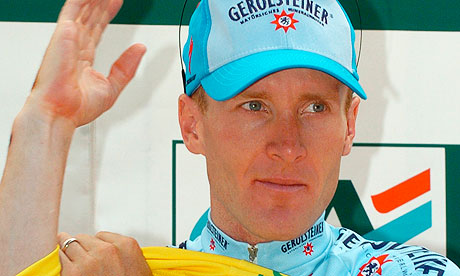
| Levi Leipheimer has admitted to using performance enhancing drugs |
It was no shocker though, that a quick Google search of Leipheimer instantly produced references to doping. Yes, Leipheimer has confessed to doping and has been dropped by his sponsor team Omega Pharma-Quick-Step. The soon-to-be 39-year-old admitted to cheating while cooperating in a USADA (United States Anti-Doping Agency) investigation into Armstrong. In a nutshell, he wasn't necessarily willing to out himself until he was contacted in connection to Armstrong in exchange for a reduced punitive penalty. Regardless, Leipheimer does want you to believe that his most accomplished results – a bronze medal at the 2008 Olympic Games and a third place finish at the 2007 Tour de France – were achieved while clean.
Isn't that convenient?
Leipheimer joins the likes of Tyler Hamilton and Floyd Landis who initially denied doping, then confessed, while asking everyone to believe their testimony that Armstrong doped. Ahh, yes. Lance Armstrong. The greatest cyclist and one of the greatest athletes to grace this earth. Initially, allegations about Armstrong doping were met with skepticism; myself including. After all, it's not unusual for someone who's caught to attempt to take someone else down as well. Well that was until a compelling report by USADA, with testimony from 26 people, 11 of them former teammates of Armstrong, detailed how Armstrong was the focal point of a comprehensive team doping program.
The report portrays Armstrong, a cancer survivor, as someone who would go to any length to meet his goals, ultimately resulting in seven Tour de France titles. Despite Armstrong's continuous denial, the collective evidence is hard to ignore. You would have to be in a state of extreme denial or disillusion to not believe he was doped up. Even his biggest supporters have begun pulling away.
![]() |
| Lance Armstrong has been stripped of his seven Tour de France titles amid doping allegations |
Trek, who sponsored and provided Armstrong's bikes, and Anheuser-Busch also cut ties with him. But the most significant end to a partnership came when Armstrong was forced to step down as chairman of Livestrong, the foundation he started to support cancer victims. That announcement may be the closest he may ever come to an admission. Though he remains on the foundation's board, these series of events suggest that the heroic worship of Armstrong may be on its last legs.
The UCI, cycling's governing body, is set to make a decision on whether or not to uphold USADA's decision. There could be a push to recover any prize money that he earned, which shouldn't hurt Armstrong financially. But for someone who worked so hard to shape and control his image and legacy, a public disgrace from his beloved sport is by far the worst possible punishment.
As for Leipheimer's documentary, no word on if it would still be released. Though if you ask me, I think it may be time to shelve the movie and swallow the financial loss.
Monday, October 8, 2012
Speak up against jungle justice
Early Friday morning, many Nigerians in the diaspora awoke to news of four University of Port Harcourt students murdered by residents of Aluu, a small community near the university, located in the oil rich Niger Delta region of Nigeria. Since the news broke, several reports have been published about the identities of these four young men and how or why they met their fate. You can read one of the first reports about this story and view some of the pictures taken while the act was being committed here.
In the days since Tekena Elkanah, Michael Toku, Chiadika Biringa and Ugonna Obuzor were bludgeoned, then set ablaze, multiple variations of this story have emerged. Depending on which one you heard, these boys were either armed robbers who had terrorized the residents of Aluu for months; going as far as killing a man as he tried to prevent his daughter or pregnant wife from being raped. Or, they were notorious cultists who were in the neighborhood to oppress residents and/or collect dues from other cult members. Or they were petty thieves who had stolen laptops and cell phones. Or they were innocent students, three of whom had accompanied the fourth to the residence of someone who owed him money. The debtor, not willing to cooperate, alerted the community of his visitors by yelling, "thief, thief." As Nigerians know, this action typically draws a large crowd, especially in large public areas like roadside markets, who take it upon themselves to execute jungle justice on the alleged criminals without necessarily confirming the fact. Another version of the story cites a fifth man who was fortunate enough to get away, however the only confirmed story so far is that these four young men are indeed dead.
I saw the pictures of this barbaric act circling the internet and was disturbed by how so many people could stand by and watch as these boys were executed in such a gruesome way. But it was even more disconcerting to learn about video footage making the rounds. I watched one of such videos, seeking some kind of explanation to this story that I knew still pictures wouldn't provide. And now I am haunted. I am haunted by the bloodied eyes of one of the victims. Unable to move any other part of his body as he sensed his end was near, he barely managed to blink his eyes slowly, once or twice, using them to plead for mercy. I can never forget that.
I can never forget the way the last of the victims remained slightly upright; somewhat defiantly, as he propped himself up with his elbow, refusing to succumb to his inevitable fate. And then one of the perpetrators, the one who joyfully pounded away as others watched without flinching, set the boys ablaze. That last boy who refused to go down, got up one more time and rolled away to get away from the fire. He refused to give up. I can’t forget this video. It’s worse than the videos of men in the middle east, stoning women to death for their alleged promiscuity. I cringed and flinched when I saw those women dropping down. I thought the worst about those men. I never thought I’d see my own countrymen commit even worse atrocities. I weep for Nigeria.
We may never know if these guys were truly armed robbers, cultists, rapists, petty thieves, or just innocent students in the wrong place and at the wrong time. It doesn’t matter now, because few members of a community already decided that no matter what, they were no longer fit to walk this earth. Make no mistakes, this isn't the first time alleged criminals have been convicted by street justice. In the past, others have suffered similar fates usually by being burned alive. This, however, is the first time most people have witnessed such extreme torture by bludgeoning them to death. It wasn't OK then, and it certainly shouldn't be tolerated now. It is time this phenomenon of jungle justice is condemned.
Acclaimed Nigerian rapper M.I. respectfully put things in perspective with this piece he posted on his blog. Nigeria has become a nation of complacency built on hope. As long as we are not personally affected by a problem or issue, we turn a blind eye to it while hoping someone takes care of the solution. This apathy has to end.

So do not believe the above picture circulating of the alleged killers being tortured. I received this picture more than a month ago with a different explanation behind it. These are not the four boys' killers. Do not let your cries for justice be silenced so this story doesn't go away quietly. Several such incidents have occurred where innocent victims were killed over false allegations, but it takes just one case to put an end to this madness. Let this be the one. Innocent or guilty, let the Aluu four become the symbol for putting an end to jungle justice.
![]() |
| Tekena Elkanah |
![]() |
| Chiadika Biringa |
![]() |
| Ugonna Obuzor |
![]() |
| Michael Lloyd Toku |
In the days since Tekena Elkanah, Michael Toku, Chiadika Biringa and Ugonna Obuzor were bludgeoned, then set ablaze, multiple variations of this story have emerged. Depending on which one you heard, these boys were either armed robbers who had terrorized the residents of Aluu for months; going as far as killing a man as he tried to prevent his daughter or pregnant wife from being raped. Or, they were notorious cultists who were in the neighborhood to oppress residents and/or collect dues from other cult members. Or they were petty thieves who had stolen laptops and cell phones. Or they were innocent students, three of whom had accompanied the fourth to the residence of someone who owed him money. The debtor, not willing to cooperate, alerted the community of his visitors by yelling, "thief, thief." As Nigerians know, this action typically draws a large crowd, especially in large public areas like roadside markets, who take it upon themselves to execute jungle justice on the alleged criminals without necessarily confirming the fact. Another version of the story cites a fifth man who was fortunate enough to get away, however the only confirmed story so far is that these four young men are indeed dead.
I saw the pictures of this barbaric act circling the internet and was disturbed by how so many people could stand by and watch as these boys were executed in such a gruesome way. But it was even more disconcerting to learn about video footage making the rounds. I watched one of such videos, seeking some kind of explanation to this story that I knew still pictures wouldn't provide. And now I am haunted. I am haunted by the bloodied eyes of one of the victims. Unable to move any other part of his body as he sensed his end was near, he barely managed to blink his eyes slowly, once or twice, using them to plead for mercy. I can never forget that.
I can never forget the way the last of the victims remained slightly upright; somewhat defiantly, as he propped himself up with his elbow, refusing to succumb to his inevitable fate. And then one of the perpetrators, the one who joyfully pounded away as others watched without flinching, set the boys ablaze. That last boy who refused to go down, got up one more time and rolled away to get away from the fire. He refused to give up. I can’t forget this video. It’s worse than the videos of men in the middle east, stoning women to death for their alleged promiscuity. I cringed and flinched when I saw those women dropping down. I thought the worst about those men. I never thought I’d see my own countrymen commit even worse atrocities. I weep for Nigeria.
We may never know if these guys were truly armed robbers, cultists, rapists, petty thieves, or just innocent students in the wrong place and at the wrong time. It doesn’t matter now, because few members of a community already decided that no matter what, they were no longer fit to walk this earth. Make no mistakes, this isn't the first time alleged criminals have been convicted by street justice. In the past, others have suffered similar fates usually by being burned alive. This, however, is the first time most people have witnessed such extreme torture by bludgeoning them to death. It wasn't OK then, and it certainly shouldn't be tolerated now. It is time this phenomenon of jungle justice is condemned.
Acclaimed Nigerian rapper M.I. respectfully put things in perspective with this piece he posted on his blog. Nigeria has become a nation of complacency built on hope. As long as we are not personally affected by a problem or issue, we turn a blind eye to it while hoping someone takes care of the solution. This apathy has to end.

So do not believe the above picture circulating of the alleged killers being tortured. I received this picture more than a month ago with a different explanation behind it. These are not the four boys' killers. Do not let your cries for justice be silenced so this story doesn't go away quietly. Several such incidents have occurred where innocent victims were killed over false allegations, but it takes just one case to put an end to this madness. Let this be the one. Innocent or guilty, let the Aluu four become the symbol for putting an end to jungle justice.
Wednesday, May 23, 2012
ESPN employed a scam artist?
I stumbled upon an incredible story while scouring the internet for sports news. An unknown contributor to a sports betting site cons her way into landing a job as an ESPN columnist. But Sarah Phillips didn't stop there. She also allegedly scammed at least three people off money with help from a friend, who some say is also her boyfriend.
Deadspin, the website reporting this, has had its fair share of questionable reporting, including an update on this same story, which involved a reader fabricating his own encounter with Phillips as proof that Deadspin didn't do the necessary background verification on him that it chastises ESPN and Covers of not conducting. But the site has also broken major stories such as the infamous Brett Favre sexting scandal. After reading the original story, which you can read here, and all subsequent updates, it's clear a more thorough investigation needs to be conducted to get to the bottom of this story. However, there's more than enough evidence of foul play committed.
So here's a summary. Phillips started out as a message board contributor for Covers.com, a sports betting site. Her colorful commentary about how successful she was betting on sports, coupled with the fact that she is a girl who supposedly knows more about sports than most guys, caught the attention of the site's administrators who hired her on as a columnist. She soon caught the attention of ESPN.com editor Lynn Hoppes who hired her as a weekly columnist for ESPN's Page 2, now renamed ESPN Playbook. With everyone fooled by her "in-depth" sports knowledge and attractive looks, she became the next Jenn Sterger–an unknown with no journalism experience, who parlayed her sexuality into sports gigs with the New York Jets, Sports Illustrated and Versus. No one bothered to perform a background check on Phillips, nor verify her real identity.
The problem started when several contributors began pointing out that the various pictures Phillips provided to Covers for her columns were different. Here's a collage of pictures courtesy of Deadspin.
Shortly after, Deadspin published its story, which it corroborated with several accounts of scamming by Phillips and her friend/boyfriend Nilesh Prasad. Writer John Koblin was also contacted by people who attended the same junior high/high school as both Phillips and Prasad, and suggested that Phillips isn't as knowledgeable as she claims to be. They said Phillips was likely relying on sports and betting tips from Prasad. Without a full investigation, ESPN opted to sever ties with her, emphasizing that she was merely a freelancer.
Here's the thing. There are now more than enough women who eat/sleep/breathe sports much more than the average guy. In fact, it's become increasingly common to hear this that I no longer consider my sports obsession as out of the ordinary (many people still do.) Unfortunately, very few of us get opportunities like the ones Sterger and Phillips have gotten. I have talked to a few editors and recruiters at ESPN about opportunities, but it never resulted in so much as an internship. I'd like to think it has nothing to do with my gender or lack of overtly sexual pictures or stories being put out there, but I wonder what more one needs to do draw some attention. I know it's not a lack of sports knowledge or educational and professional experience since I not only have a master's in broadcast journalism, but also have extensive experience covering a variety of sports.
Still, I am genuinely happy when women are given the opportunity to show they can be just as informed or plugged into sports as the best of male sports experts out there. However, I am intensely ticked off when I read stories like this where someone gets a free pass into this exclusive club without so much as a background check. How do you justify that?
Both Covers.com and ESPN.com editors have admitted to never meeting Phillips, though someone at the former said he spoke to her several times. Since Phillips was fired, she has taken to defending herself on Twitter, at first saying all of the pictures posted were of her, before admitting to hiding her identity so she isn't exposed to future employers as a gambler. She also claimed to have let go of several friends who have had negative impacts on her life. However, she didn't specify who these friends were. The issue of scamming, however, has yet to be resolved, according to victims referenced in the article.
I hope stories like these won't deter sports organizations and media from giving women a chance to prove we can be effective in this industry. I only hope they will spend the appropriate time to verify our credibility. Maybe when this becomes the norm, people like me will get a fair opportunity at advancing my career as a sports journalist.
Deadspin, the website reporting this, has had its fair share of questionable reporting, including an update on this same story, which involved a reader fabricating his own encounter with Phillips as proof that Deadspin didn't do the necessary background verification on him that it chastises ESPN and Covers of not conducting. But the site has also broken major stories such as the infamous Brett Favre sexting scandal. After reading the original story, which you can read here, and all subsequent updates, it's clear a more thorough investigation needs to be conducted to get to the bottom of this story. However, there's more than enough evidence of foul play committed.
So here's a summary. Phillips started out as a message board contributor for Covers.com, a sports betting site. Her colorful commentary about how successful she was betting on sports, coupled with the fact that she is a girl who supposedly knows more about sports than most guys, caught the attention of the site's administrators who hired her on as a columnist. She soon caught the attention of ESPN.com editor Lynn Hoppes who hired her as a weekly columnist for ESPN's Page 2, now renamed ESPN Playbook. With everyone fooled by her "in-depth" sports knowledge and attractive looks, she became the next Jenn Sterger–an unknown with no journalism experience, who parlayed her sexuality into sports gigs with the New York Jets, Sports Illustrated and Versus. No one bothered to perform a background check on Phillips, nor verify her real identity.
The problem started when several contributors began pointing out that the various pictures Phillips provided to Covers for her columns were different. Here's a collage of pictures courtesy of Deadspin.
Shortly after, Deadspin published its story, which it corroborated with several accounts of scamming by Phillips and her friend/boyfriend Nilesh Prasad. Writer John Koblin was also contacted by people who attended the same junior high/high school as both Phillips and Prasad, and suggested that Phillips isn't as knowledgeable as she claims to be. They said Phillips was likely relying on sports and betting tips from Prasad. Without a full investigation, ESPN opted to sever ties with her, emphasizing that she was merely a freelancer.
Here's the thing. There are now more than enough women who eat/sleep/breathe sports much more than the average guy. In fact, it's become increasingly common to hear this that I no longer consider my sports obsession as out of the ordinary (many people still do.) Unfortunately, very few of us get opportunities like the ones Sterger and Phillips have gotten. I have talked to a few editors and recruiters at ESPN about opportunities, but it never resulted in so much as an internship. I'd like to think it has nothing to do with my gender or lack of overtly sexual pictures or stories being put out there, but I wonder what more one needs to do draw some attention. I know it's not a lack of sports knowledge or educational and professional experience since I not only have a master's in broadcast journalism, but also have extensive experience covering a variety of sports.
Still, I am genuinely happy when women are given the opportunity to show they can be just as informed or plugged into sports as the best of male sports experts out there. However, I am intensely ticked off when I read stories like this where someone gets a free pass into this exclusive club without so much as a background check. How do you justify that?
Both Covers.com and ESPN.com editors have admitted to never meeting Phillips, though someone at the former said he spoke to her several times. Since Phillips was fired, she has taken to defending herself on Twitter, at first saying all of the pictures posted were of her, before admitting to hiding her identity so she isn't exposed to future employers as a gambler. She also claimed to have let go of several friends who have had negative impacts on her life. However, she didn't specify who these friends were. The issue of scamming, however, has yet to be resolved, according to victims referenced in the article.
I hope stories like these won't deter sports organizations and media from giving women a chance to prove we can be effective in this industry. I only hope they will spend the appropriate time to verify our credibility. Maybe when this becomes the norm, people like me will get a fair opportunity at advancing my career as a sports journalist.
Friday, May 18, 2012
NFL Commissioner facing lawsuit
He may be the most important man in the NFL, but one player wants a piece of NFL Commissioner Roger Goodell.
New Orleans Saints linebacker Jonathan Vilma is suing Goodell for defamation, saying the commissioner damaged his reputation in suspending him for a year for his role in the much talked about Saints bounty program.
Goodell suspended Vilma, an eight-year vet and the Saints defensive captain, and three other current and past members of the Saints for participating in a bounty program that rewarded players for taking out major players on opposing teams. Vilma was handed the stiffest punishment of the four: a season-long suspension without pay; the same punishment handed to Saints coach Sean Payton.
Vilma has vehemently denied being the leader of the bounty program, and has taken to Twitter to share his thoughts. "I NEVER PAID, NOR INTENDED TO PAY ANY AMOUNT OF MONEY, TO ANY PLAYER FOR INTENTIONALLY HURTING AN OPPONENT," Vilma said through his Twitter account.
By suing Goodell, Vilma is sending a strong statement challenging the validity of the evidence presented against him. Vilma insists he was never interviewed about his alleged role and has yet to see any of the evidence presented. The NFL Player's Association also requested to view any hard evidence, but says the NFL has refused to comply. But the league hired former federal prosecutor Mary Jo White to review its evidence, and White has said the NFL's findings were supported by valid documentation and multiple independent witnesses.
It's unclear whether or not Goodell would make public what he knows about Vilma's involvement to justify a year-long suspension, but this lawsuit certainly puts a much bigger pressure on the commissioner to release the information.
If I'm Vilma, and I'm a 100 percent sure I didn't front money for a bounty start-up program, then the lawsuit is a smart decision. As rightfully stated, this suspension affects his income and casts a dark cloud on his reputation on the field. It labels him a dirty player and leaves his future in the league vulnerable if he's released by the Saints.
At this point, you have two sides of this issue standing behind their statements. But there can only be one person telling the truth. The three other players suspended–linebacker Scott Fujita, defensive end Will Smith and defensive lineman Anthony Hargrove–have apologized for their roles, but Vilma continues to stand his ground. It is time for Commissioner Goodell to release the evidence so this story can be put to bed.
New Orleans Saints linebacker Jonathan Vilma is suing Goodell for defamation, saying the commissioner damaged his reputation in suspending him for a year for his role in the much talked about Saints bounty program.
Goodell suspended Vilma, an eight-year vet and the Saints defensive captain, and three other current and past members of the Saints for participating in a bounty program that rewarded players for taking out major players on opposing teams. Vilma was handed the stiffest punishment of the four: a season-long suspension without pay; the same punishment handed to Saints coach Sean Payton.
Vilma has vehemently denied being the leader of the bounty program, and has taken to Twitter to share his thoughts. "I NEVER PAID, NOR INTENDED TO PAY ANY AMOUNT OF MONEY, TO ANY PLAYER FOR INTENTIONALLY HURTING AN OPPONENT," Vilma said through his Twitter account.
By suing Goodell, Vilma is sending a strong statement challenging the validity of the evidence presented against him. Vilma insists he was never interviewed about his alleged role and has yet to see any of the evidence presented. The NFL Player's Association also requested to view any hard evidence, but says the NFL has refused to comply. But the league hired former federal prosecutor Mary Jo White to review its evidence, and White has said the NFL's findings were supported by valid documentation and multiple independent witnesses.
It's unclear whether or not Goodell would make public what he knows about Vilma's involvement to justify a year-long suspension, but this lawsuit certainly puts a much bigger pressure on the commissioner to release the information.
If I'm Vilma, and I'm a 100 percent sure I didn't front money for a bounty start-up program, then the lawsuit is a smart decision. As rightfully stated, this suspension affects his income and casts a dark cloud on his reputation on the field. It labels him a dirty player and leaves his future in the league vulnerable if he's released by the Saints.
At this point, you have two sides of this issue standing behind their statements. But there can only be one person telling the truth. The three other players suspended–linebacker Scott Fujita, defensive end Will Smith and defensive lineman Anthony Hargrove–have apologized for their roles, but Vilma continues to stand his ground. It is time for Commissioner Goodell to release the evidence so this story can be put to bed.
Saturday, May 5, 2012
Junior Seau's death raises questions
Former NFL linebacker Junior Seau was found dead in his home Wednesday of an apparent self-inflicted gunshot wound to his chest. He was 43.
Throughout his 20-year Hall-of-Fame career, Seau was known as a "buddy" to everyone. A great stand up guy who was celebrated as much for his exemplary character as he was for his big defensive plays. That Seau, the lovable guy, doesn't jive with some of his post-career behavior, which ended unfortunately with his untimely death. The San Diego County medical examiner's office confirmed the cause of death as suicide. No notes were found.
Seau's death will undoubtedly send discussions on the NFL's biggest problem–post career effects of concussions–into overdrive. The NFL is currently being sued by a number of former players who say that numerous concussions and injuries over the cause of their careers have resulted in permanent brain damage, depression, irreparable physical injuries and suicidal tendencies. This, while New Orleans head coach Sean Payton and Jonathan Vilma, the team's defensive captain, were suspended for a year for their roles in the infamous bounty program aimed at taking out significant players on opposing teams.
Seau wasn't involved in the lawsuit, nor was he publicly diagnosed with clinical depression. In fact, a few people who met with the 20-year vet in the days before his death say he appeared cheerful and happy. Hall Of-Famer Jerry Rice played golf with Seau on Monday and said he appeared upbeat. Video footage taken of Seau at a USC practice showed him happy and clowning in front of the camera. Basically, there was no reason to think Seau would ever commit suicide.
With the exception of a few odd incidents in late 2010, Seau's professional and personal life seemed to be without blemish. But those incidents, now put in context, are telling. In October 2010, just hours after he was arrested for a domestic violence incident involving his girlfriend, Seau drove his SUV off a cliff, plunging 100 feet. Incredibly, he survived with only minor injuries, and told authorities he had fallen asleep on the wheel. No drugs or alcohol were found in his system.
In light of his death, it makes one wonder if the plunge had actually been an accident caused by a sleeping Seau, or something more. Was it a sign of a troubled life hidden beneath the jokes and smiles? Was it a cry for help? That Seau shot himself in the chest a year after former Chicago Bears Dave Duerson died by a self-inflicted gun shot wound to the same area, suggests that like Duerson, he wanted his brain preserved for testing to show a correlation between repeated concussions and depression among players. Seau's family has agreed to donate his brain for research.
It could be months before any tests can determine if Seau suffered from chronic traumatic encephalopathy (CTE,) a neurological disorder caused by repeated head trauma, which has been found in the brains of several deceased NFL players. But if it is, he would become the highest profile NFL athlete linked to the disorder, giving even more cause for concern about safety in the sport.
The NFL has a serious problem that needs to be addressed before there are many more casualties. Players like future HOF inductee Kurt Warner are stating their reluctance to let their children participate in football. The league makes way too much money from players subjecting their bodies to the worst treatment on the field. It's time to show these players that the league cares as much about their post-career well being by dedicating unlimited resources to resolving this problem.
Throughout his 20-year Hall-of-Fame career, Seau was known as a "buddy" to everyone. A great stand up guy who was celebrated as much for his exemplary character as he was for his big defensive plays. That Seau, the lovable guy, doesn't jive with some of his post-career behavior, which ended unfortunately with his untimely death. The San Diego County medical examiner's office confirmed the cause of death as suicide. No notes were found.
Seau's death will undoubtedly send discussions on the NFL's biggest problem–post career effects of concussions–into overdrive. The NFL is currently being sued by a number of former players who say that numerous concussions and injuries over the cause of their careers have resulted in permanent brain damage, depression, irreparable physical injuries and suicidal tendencies. This, while New Orleans head coach Sean Payton and Jonathan Vilma, the team's defensive captain, were suspended for a year for their roles in the infamous bounty program aimed at taking out significant players on opposing teams.
Seau wasn't involved in the lawsuit, nor was he publicly diagnosed with clinical depression. In fact, a few people who met with the 20-year vet in the days before his death say he appeared cheerful and happy. Hall Of-Famer Jerry Rice played golf with Seau on Monday and said he appeared upbeat. Video footage taken of Seau at a USC practice showed him happy and clowning in front of the camera. Basically, there was no reason to think Seau would ever commit suicide.
With the exception of a few odd incidents in late 2010, Seau's professional and personal life seemed to be without blemish. But those incidents, now put in context, are telling. In October 2010, just hours after he was arrested for a domestic violence incident involving his girlfriend, Seau drove his SUV off a cliff, plunging 100 feet. Incredibly, he survived with only minor injuries, and told authorities he had fallen asleep on the wheel. No drugs or alcohol were found in his system.
In light of his death, it makes one wonder if the plunge had actually been an accident caused by a sleeping Seau, or something more. Was it a sign of a troubled life hidden beneath the jokes and smiles? Was it a cry for help? That Seau shot himself in the chest a year after former Chicago Bears Dave Duerson died by a self-inflicted gun shot wound to the same area, suggests that like Duerson, he wanted his brain preserved for testing to show a correlation between repeated concussions and depression among players. Seau's family has agreed to donate his brain for research.
It could be months before any tests can determine if Seau suffered from chronic traumatic encephalopathy (CTE,) a neurological disorder caused by repeated head trauma, which has been found in the brains of several deceased NFL players. But if it is, he would become the highest profile NFL athlete linked to the disorder, giving even more cause for concern about safety in the sport.
The NFL has a serious problem that needs to be addressed before there are many more casualties. Players like future HOF inductee Kurt Warner are stating their reluctance to let their children participate in football. The league makes way too much money from players subjecting their bodies to the worst treatment on the field. It's time to show these players that the league cares as much about their post-career well being by dedicating unlimited resources to resolving this problem.
Thursday, May 3, 2012
13 charged in connection with FAMU hazing death
Eleven people are facing felony charges over the death of Florida A&M University Marching 100 drum major Robert Champion, according to an Associated Press report.
If convicted, the accused could face up to six years in prison if they have no prior criminal charges. Two others face misdemeanor charges stemming from their role in the hazing death of Champion after a band outing in Orlando last November.
Florida State attorney Lawson Lamar said an additional 20 misdemeanor charges have been filed against others in unrelated incidents.
It's the latest fall out to hit the FAMU community since Champion died. The Marching 100, considered among the top college bands in the nation, was suspended. Shortly after, other alleged hazing incidents were brought to light. Reports of financial misappropriation of money by the university also forced a state-backed investigation on the university as a whole.
But the university faces no bigger issue than determining who bears the responsibility of Champion's death. Two of the 11 charged have been identified as 24-year-old Rikki Wills, who was also a drum major, and 23-year-old Caleb Jackson. No other names have been revealed and it is unclear if any faculty members will face charges.
If convicted, the accused could face up to six years in prison if they have no prior criminal charges. Two others face misdemeanor charges stemming from their role in the hazing death of Champion after a band outing in Orlando last November.
Florida State attorney Lawson Lamar said an additional 20 misdemeanor charges have been filed against others in unrelated incidents.
It's the latest fall out to hit the FAMU community since Champion died. The Marching 100, considered among the top college bands in the nation, was suspended. Shortly after, other alleged hazing incidents were brought to light. Reports of financial misappropriation of money by the university also forced a state-backed investigation on the university as a whole.
But the university faces no bigger issue than determining who bears the responsibility of Champion's death. Two of the 11 charged have been identified as 24-year-old Rikki Wills, who was also a drum major, and 23-year-old Caleb Jackson. No other names have been revealed and it is unclear if any faculty members will face charges.
Wednesday, April 18, 2012
A football team and counting for Jets' Cromatie.
The wife of New York Jets Antonio Cromatie is expecting twins, bringing his soon-to-be total number of children to 12.
Just days after a public announcement that Cromatie had recently fathered his 10th child, the cornerback's wife, Terricka Cason, announced via Twitter that the couple are expecting twins in November.
Terricka Cason posted this sonogram of twins she's expecting on Twitter.
It would be the third and fourth children with Cromatie for Cason, who also has another child from a previous relationship. Cromatie has eight other children by seven other women.
On a 2010 episode of HBO's Hard Knocks, starring the Jets, Cromatie struggled to name all seven of his children at the time, and was publicly derided by the media for a lack of moral responsibility. He also needed a $500,000 advance when he signed with the Jets to cover his child support payments.
A rundown of Cromatie's 10 children. In the absence of a picture, the mother of the child is identified.
So it's surprising that he continues to father even more children without so much as a breather between each. It's understandable that Cromatie would want to have children with his wife. But after two children, maybe it was time to reconsider having more kids. Or at least hold off for a few years after reassessing his financial situation.
Cromatie signed a four-year, $32 million contract–about $8 million (pre taxes) annually–so he is more than capable of taking care of his children. For now.
At 28, playing in a league that doesn't offer guaranteed contracts, there's no surety that Cromatie will play out this contract or the next. And if he does, what financial plans has he set up to avoid the plight of hundreds of ex-players who made millions in their careers, yet are bankrupt today?
Having children is a gift not everyone is blessed with. That's clearly not Cromatie's problem. Many fathers, even mothers, have absconded from their responsibilities as parents. So far, that's also not an issue affecting Cromatie. But the list of uber wealthy athletes who've neglected their child support payments after falling on hard times (Terrell Owens, Antoine Walker, Travis Henry to name a few) includes the who's who of the sports world.
Let's hope Cromatie can avoid that after all. Ideally, he should set up trust funds for each of his children, accessible when the children become adults. But telling someone to do what's right is just one thing. Getting the person to actually do it, is another.
Just days after a public announcement that Cromatie had recently fathered his 10th child, the cornerback's wife, Terricka Cason, announced via Twitter that the couple are expecting twins in November.
Terricka Cason posted this sonogram of twins she's expecting on Twitter.
It would be the third and fourth children with Cromatie for Cason, who also has another child from a previous relationship. Cromatie has eight other children by seven other women.
On a 2010 episode of HBO's Hard Knocks, starring the Jets, Cromatie struggled to name all seven of his children at the time, and was publicly derided by the media for a lack of moral responsibility. He also needed a $500,000 advance when he signed with the Jets to cover his child support payments.
A rundown of Cromatie's 10 children. In the absence of a picture, the mother of the child is identified.
So it's surprising that he continues to father even more children without so much as a breather between each. It's understandable that Cromatie would want to have children with his wife. But after two children, maybe it was time to reconsider having more kids. Or at least hold off for a few years after reassessing his financial situation.
Cromatie signed a four-year, $32 million contract–about $8 million (pre taxes) annually–so he is more than capable of taking care of his children. For now.
At 28, playing in a league that doesn't offer guaranteed contracts, there's no surety that Cromatie will play out this contract or the next. And if he does, what financial plans has he set up to avoid the plight of hundreds of ex-players who made millions in their careers, yet are bankrupt today?
Having children is a gift not everyone is blessed with. That's clearly not Cromatie's problem. Many fathers, even mothers, have absconded from their responsibilities as parents. So far, that's also not an issue affecting Cromatie. But the list of uber wealthy athletes who've neglected their child support payments after falling on hard times (Terrell Owens, Antoine Walker, Travis Henry to name a few) includes the who's who of the sports world.
Let's hope Cromatie can avoid that after all. Ideally, he should set up trust funds for each of his children, accessible when the children become adults. But telling someone to do what's right is just one thing. Getting the person to actually do it, is another.
Sunday, April 15, 2012
Wade calls for, then backs off Olympic pay
Should NBA stars be paid to compete at the Olympics? Yes, if you take the Boston Celtics' Ray Allen and Miami Heat's Dwyane Wade's words for it.
The two recently called for U.S. NBA stars to receive some type of compensation for being the biggest stars at the Olympic Games, suggesting that it come by way of jersey sales.
Athletes are typically not paid to compete at the Olympics, which relies more on an individual's pride to represent a country on the biggest athletic stage. Beyond the prize money athletes get from winning a medal or breaking a record, some countries, like my native country Nigeria, gift their medal winners with cash upon a ceremonial return home. The U.S. hasn't typically done that, but most athletes receive some sort of sponsorship or promotional endorsement (think Wheaties and Coca-Cola ads featuring Olympic champions).
Basically, most get paid one way or the other for climbing the medal podium; some more than others.
It is no secret that NBA players draw the biggest fans at the Games for a number of reasons. The NBA brand ranks among the top globally recognized sports leagues. Unlike track & field, the biggest competitive attraction (more specifically the sprints) among Olympic events, NBA players are ubiquitously chased after and hounded by media and fans. Very few people outside of T&F core fans recognize superstars not named Usain Bolt, Sanya Richards or Allyson Felix. Tyson Gay could walk through Times Square and go unnoticed. Ditto that for the current fastest woman in the world Carmelita Jeter. And we're not even talking field athletes or even other sports. Michael Phelps gets the rock star treatment after his incredible feat at the Beijing Olympics, but swimming as a sport is hardly relevant outside of Olympic years, and very few can name two or three other swimmers who would likely make the roster for the London Games.
But you would be hard-pressed to find one person who isn't familiar with the entire roster on the U.S. basketball team. And their Olympic jerseys are as in demand as their NBA gear. So I can understand inquiring about compensation for jersey sales. However, these guys already command salaries well into the tens of millions of dollars. They don't need the money. To publicly declare that they should be paid for being patriotic is as unpatriotic as it gets. Worse, they come off looking greedy. Which is no wonder Wade backed off his statement less than 24 hours after initially making it, saying emphatically that he did not want to be paid to represent the U.S.
What Allen and Wade could do is suggest that the proceeds be channeled into the development or training of athletes in other sports not as profitable as theirs, which I suspect is already the case. Fencing, canoeing/kayaking, archery and equestrian may not be popular enough to generate significant endorsement deals, but these sports can be fairly expensive to train for. Even track & field athletes earn considerably low prize winnings compared to the level of training and travel they have to put in. If you're not among the upper echelon of athletes who earn appearance fees, which are sometimes higher than the prize money, traveling to compete could actually be financially bankrupting. They could do with the help.
I don't think Allen or Wade would balk at the chance to represent the U.S. for nothing, if asked to do so. It could just have been a concern about not having any input into the profiting off of their names. But there's a more patriotic way to get involved, and it doesn't involve them pocketing any money. It involves helping others achieve their dreams of representing the U.S. at the Olympic Games.
The two recently called for U.S. NBA stars to receive some type of compensation for being the biggest stars at the Olympic Games, suggesting that it come by way of jersey sales.
Athletes are typically not paid to compete at the Olympics, which relies more on an individual's pride to represent a country on the biggest athletic stage. Beyond the prize money athletes get from winning a medal or breaking a record, some countries, like my native country Nigeria, gift their medal winners with cash upon a ceremonial return home. The U.S. hasn't typically done that, but most athletes receive some sort of sponsorship or promotional endorsement (think Wheaties and Coca-Cola ads featuring Olympic champions).
Basically, most get paid one way or the other for climbing the medal podium; some more than others.
It is no secret that NBA players draw the biggest fans at the Games for a number of reasons. The NBA brand ranks among the top globally recognized sports leagues. Unlike track & field, the biggest competitive attraction (more specifically the sprints) among Olympic events, NBA players are ubiquitously chased after and hounded by media and fans. Very few people outside of T&F core fans recognize superstars not named Usain Bolt, Sanya Richards or Allyson Felix. Tyson Gay could walk through Times Square and go unnoticed. Ditto that for the current fastest woman in the world Carmelita Jeter. And we're not even talking field athletes or even other sports. Michael Phelps gets the rock star treatment after his incredible feat at the Beijing Olympics, but swimming as a sport is hardly relevant outside of Olympic years, and very few can name two or three other swimmers who would likely make the roster for the London Games.
But you would be hard-pressed to find one person who isn't familiar with the entire roster on the U.S. basketball team. And their Olympic jerseys are as in demand as their NBA gear. So I can understand inquiring about compensation for jersey sales. However, these guys already command salaries well into the tens of millions of dollars. They don't need the money. To publicly declare that they should be paid for being patriotic is as unpatriotic as it gets. Worse, they come off looking greedy. Which is no wonder Wade backed off his statement less than 24 hours after initially making it, saying emphatically that he did not want to be paid to represent the U.S.
What Allen and Wade could do is suggest that the proceeds be channeled into the development or training of athletes in other sports not as profitable as theirs, which I suspect is already the case. Fencing, canoeing/kayaking, archery and equestrian may not be popular enough to generate significant endorsement deals, but these sports can be fairly expensive to train for. Even track & field athletes earn considerably low prize winnings compared to the level of training and travel they have to put in. If you're not among the upper echelon of athletes who earn appearance fees, which are sometimes higher than the prize money, traveling to compete could actually be financially bankrupting. They could do with the help.
I don't think Allen or Wade would balk at the chance to represent the U.S. for nothing, if asked to do so. It could just have been a concern about not having any input into the profiting off of their names. But there's a more patriotic way to get involved, and it doesn't involve them pocketing any money. It involves helping others achieve their dreams of representing the U.S. at the Olympic Games.
Sunday, February 26, 2012
Terrell Owens money woes highlights a sad trend in sports
Terrell Owens has returned to Texas to play football.
No, not for the NFL's Dallas Cowboys, a team he once suited up for, but for the Allen Wranglers of the Indoor Football League. Owens made his debut on Feb. 25, scoring touchdowns on all three of his catches.
It's a far cry from the stardom he once reveled in, but its about the only contract the 38-year-old could command after missing the entire 2011-2012 season recovering from a major knee injury. Owens' stands to earn $500,000 for his contributions to the team, more than the NFL's minimum wage. He also gets a 50 percent ownership stake of the Wranglers. The average IFL player makes $225 a game.
When you put that in perspective, half a million bucks is a lot of money to give to a player who will do little more than boost the publicity of the team. But why does one of the NFL's greatest wide receivers need to suit for a team he had never heard of, or for a league so far down the NFL's recruiting depth chart?
Because T.O. is broke! With no income coming in and plenty of mouths to feed, Owens net worth has been drastically reduced. While he says he isn't really broke, Owens has acknowledged that he is in jeopardy of losing everything he earned in his 15 seasons in the NFL; most notably a house he purchased for his mom.
It's the same old cycle. Boy grows up poor, gets an athletic scholarship to college, propels that into a professional career worth millions of dollars, then squanders everything on an expensive lifestyle, supporting his entire neighborhood and bad investment decisions.
Former NBA players Allen Iverson, Latrell Sprewell (who's famous for turning down a three-year, $21 million contract because it wasn't enough to feed his children, effectively ending his career,) Anthony Mason and Derrick Coleman are just a few athletes who are heavily in debt despite earning several million dollars.
Some are just guilty of mismanaging their earnings, but there's one other factor many of these athletes have in common: baby mama drama. In an interview he gave to GQ magazine, which you can read in its entirety here, Owens discusses his financial hardship, which is compounded by monthly child support payments of $44,600 he was ordered to pay to four women who bore four children for him. Though he has earned at least $80 million in his career, Owens said unlike many athletes, he never made exorbitant purchases. He said his biggest mistake was being to trusting. Trusting friends with access to his accounts, trusting financial investors to make investment choices in his behalf and engaging in a sexual relationship with each of his baby mamas despite never actually dating them.
It's a similar situation former NBA player Antoine Walker faces. Despite making $110 million in his career, Walker is now heavily in debt. Owing thousands of dollars in back child support payments to the mothers of his two daughters, Walker also blames trusting friends who squandered a chunk of his wealth in bad investments and have disappeared now that his debtors have come calling. Walker, no saint himself, is also indebted to a few Las Vegas casinos for an expensive gambling habit he picked up while rolling with NBA legend Michael Jordan.
Then there are the grand daddies of the child making factories: former NFL running back Travis Henry and current New York Jet Antonio Cromatie.
Henry, whose story you can read here, played six years in the league, and fathered nine children with nine women. With his first child conceived while he was in high school, Henry admitted that all but one of his children were unplanned. By the time he got into the NFL, he already had three children, but laughed his way through an NFL symposium educating rookies on the dangers of risky sexual activity. His explanation for fathering so many kids? Trusting the women when they claimed they were on birth control pills. By the time he turned 30, Henry's career was already over, and with no income coming in and plenty going out, it was no surprise when he was arrested for allegedly trafficking cocaine.
Cromatie also has nine children he fathered with eight women across six states, one of whom he is currently married to. Cromatie, drafted in 2006, has not been in the league very long, and needed a $500,000 advance when he signed with the Jets to catch up on his child support payments. All nine kids are separated by a five-year gap. Unlike Henry, who claimed to be in long term relationships with most of his baby mamas, Cromatie, whose story you can read about here, engaged in multiple relationships simultaneously.
Guys, you can't make these things up.
What goes through these athletes minds when they are hitting the sack with women they barely know, yet trusting these women who say they are on the pill? No regard for the risk of picking up an STD, and certainly no regard for the possibility of bringing in an innocent child into the mix. Both Owens and Cromatie have admitted to not having any kind of relationship with at least one of their kids; apparently not really concerned about how their absences affect these kids and their future.
Which is why I have no sympathy for Owens when he talks about being ignored by friends and the NFL. You made your bed so you must lay on it. Walker, in an Outside The Lines interview, talked about discussing his story so young guys entering the league can be aware of what could happen if they don't manage their money, careers and the people around them properly. But there have been plenty of examples before him. While Walker was partying with Jordan, he could have looked up the stories of athletes like Evander Holyfield, who reportedly has fathered 11 children and blown an estimated $250 million in career earnings.
At the end of the day, what these guys, and others like them, need to understand is, you can change a financial advisor who risks your money in bad investments. You can develop another career after your playing days (many athletes end up as analysts, others take up coaching or become authors,) but you can never change the mother of your children. And what some of these women have shown is they don't care if they fall to number 10 on the depth chart, they expect to get paid like they are No. 1.
If the billionaire team owners who pay your salaries won't pay the fourth or fifth guy on the depth chart what the franchise player earns, what makes you think you can afford to do just that?
My advice: stop trusting these women to recognize that your money may not always be there for the taking and start making better decisions on the people you choose to establish a lifetime bond or commitment with.
No, not for the NFL's Dallas Cowboys, a team he once suited up for, but for the Allen Wranglers of the Indoor Football League. Owens made his debut on Feb. 25, scoring touchdowns on all three of his catches.
It's a far cry from the stardom he once reveled in, but its about the only contract the 38-year-old could command after missing the entire 2011-2012 season recovering from a major knee injury. Owens' stands to earn $500,000 for his contributions to the team, more than the NFL's minimum wage. He also gets a 50 percent ownership stake of the Wranglers. The average IFL player makes $225 a game.
| Besides co-owning the Allen Wranglers, Terrell Owens will also suit up for the team |
Because T.O. is broke! With no income coming in and plenty of mouths to feed, Owens net worth has been drastically reduced. While he says he isn't really broke, Owens has acknowledged that he is in jeopardy of losing everything he earned in his 15 seasons in the NFL; most notably a house he purchased for his mom.
It's the same old cycle. Boy grows up poor, gets an athletic scholarship to college, propels that into a professional career worth millions of dollars, then squanders everything on an expensive lifestyle, supporting his entire neighborhood and bad investment decisions.
Former NBA players Allen Iverson, Latrell Sprewell (who's famous for turning down a three-year, $21 million contract because it wasn't enough to feed his children, effectively ending his career,) Anthony Mason and Derrick Coleman are just a few athletes who are heavily in debt despite earning several million dollars.
Some are just guilty of mismanaging their earnings, but there's one other factor many of these athletes have in common: baby mama drama. In an interview he gave to GQ magazine, which you can read in its entirety here, Owens discusses his financial hardship, which is compounded by monthly child support payments of $44,600 he was ordered to pay to four women who bore four children for him. Though he has earned at least $80 million in his career, Owens said unlike many athletes, he never made exorbitant purchases. He said his biggest mistake was being to trusting. Trusting friends with access to his accounts, trusting financial investors to make investment choices in his behalf and engaging in a sexual relationship with each of his baby mamas despite never actually dating them.
It's a similar situation former NBA player Antoine Walker faces. Despite making $110 million in his career, Walker is now heavily in debt. Owing thousands of dollars in back child support payments to the mothers of his two daughters, Walker also blames trusting friends who squandered a chunk of his wealth in bad investments and have disappeared now that his debtors have come calling. Walker, no saint himself, is also indebted to a few Las Vegas casinos for an expensive gambling habit he picked up while rolling with NBA legend Michael Jordan.
| Retired NBA veteran Antoine Walker reportedly owes millions to several debtors |
Henry, whose story you can read here, played six years in the league, and fathered nine children with nine women. With his first child conceived while he was in high school, Henry admitted that all but one of his children were unplanned. By the time he got into the NFL, he already had three children, but laughed his way through an NFL symposium educating rookies on the dangers of risky sexual activity. His explanation for fathering so many kids? Trusting the women when they claimed they were on birth control pills. By the time he turned 30, Henry's career was already over, and with no income coming in and plenty going out, it was no surprise when he was arrested for allegedly trafficking cocaine.
| Travis Henry, no longer in the NFL, has struggled to provide for his nine children |
| The N.Y. Jets cornerback fathered nine children within a five-year period |
What goes through these athletes minds when they are hitting the sack with women they barely know, yet trusting these women who say they are on the pill? No regard for the risk of picking up an STD, and certainly no regard for the possibility of bringing in an innocent child into the mix. Both Owens and Cromatie have admitted to not having any kind of relationship with at least one of their kids; apparently not really concerned about how their absences affect these kids and their future.
Which is why I have no sympathy for Owens when he talks about being ignored by friends and the NFL. You made your bed so you must lay on it. Walker, in an Outside The Lines interview, talked about discussing his story so young guys entering the league can be aware of what could happen if they don't manage their money, careers and the people around them properly. But there have been plenty of examples before him. While Walker was partying with Jordan, he could have looked up the stories of athletes like Evander Holyfield, who reportedly has fathered 11 children and blown an estimated $250 million in career earnings.
| Owens recently won a petition to have child support payments to four women reduced to reflect his reduced income |
If the billionaire team owners who pay your salaries won't pay the fourth or fifth guy on the depth chart what the franchise player earns, what makes you think you can afford to do just that?
My advice: stop trusting these women to recognize that your money may not always be there for the taking and start making better decisions on the people you choose to establish a lifetime bond or commitment with.
Saturday, February 25, 2012
Why soccer isn't popular among blacks in the U.S.
This documentary was my graduate project, the final piece to completing my master's in science at Florida A&M University. It was challenging shooting, interviewing, writing and editing–in a nutshell producing the entire documentary–on my own. But I believe I met my goal,which was to create a thought-provoking documentary that raises awareness and sparks a discussion on the issue.
I'd love to get your thoughts or opinions on the documentary, while keeping in mind that the experiences are localized to the Miami and Tallahassee, Fla., areas. In other words, a lot can still be done to expand the scope of research on a national level.
Thanks to all who supported me through my difficult moments, I finally did it!
I'd love to get your thoughts or opinions on the documentary, while keeping in mind that the experiences are localized to the Miami and Tallahassee, Fla., areas. In other words, a lot can still be done to expand the scope of research on a national level.
Thanks to all who supported me through my difficult moments, I finally did it!
Subscribe to:
Posts (Atom)